Memory Care
Memory care that feels like home
Planned for CottonWood Village in Cottonwood, Arizona, our memory care unit will give residents living with dementia a secure, small-scale home where daily life follows familiar rhythms, staff know every resident well, and families stay closely involved.
CottonWood Village · Cottonwood, Arizona
A village, not a facility
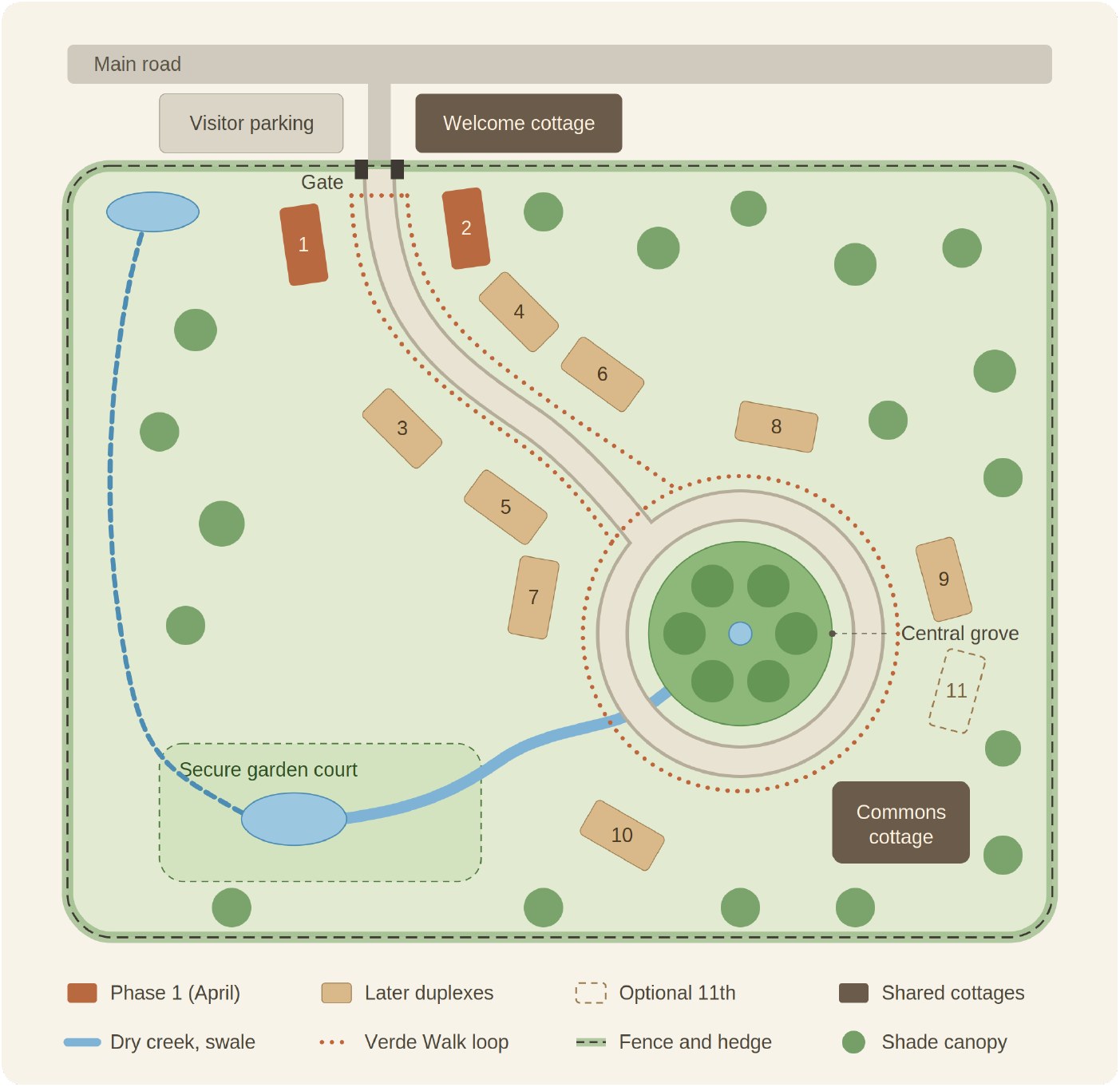
CottonWood Village is planned as a gated community of single-story cottage duplexes in the Verde Valley, between the river town of Cottonwood and Sedona’s red rocks. Each home has three or four private bedrooms, a deep front porch and its own shaded garden room.
Instead of an asphalt cul-de-sac, the heart of the village is a grove of cottonwood trees with a fountain. Shaded paths loop through the grove and along the lane with no dead ends, so residents can walk freely and safely, the way they would in any neighborhood.
A shallow creek runs from the grove to a secure garden court, the setting for the memory care unit: a continuous looping path, plenty of safe outdoor space, and water and planting chosen to calm rather than confine.
Safeguards that don’t look like safeguards
Safe by design, never institutional
Security sits at the edge of the property, not at anyone’s front door. Inside the fence, the village is designed to feel open.
- A garden edge, not a wallAn ornamental fence on a low stone base, screened by native hedging, with a staffed Welcome Cottage at the gate.
- Paths made for wanderingWide, gently graded loops with benches and shade every few dozen yards, and matte paving that won’t read as holes to someone with dementia.
- Refitted for safetyEvery home gets a curbless roll-in shower, grab bars on reinforced framing, anti-scald valves, and emergency call pulls with night lighting in every bathroom.
- Quiet technologyDiscreet wearables with fall detection, camera-free radar fall sensors in bedrooms, and nurse call tied to care records.
- Privacy firstCameras only in shared outdoor areas, never in bedrooms or bathrooms.
- Built for the desertShade over every bench and patio, porches turned from the afternoon sun, and a landscape of cottonwood, sycamore and native perennials, with nothing toxic planted.
Why small homes work
The research points to the group home
Traditional dementia care has mostly been delivered in large nursing homes. A study from Maastricht University, published in the Journal of Clinical Nursing, followed small group living units of ten residents each and found good quality care in a domestic setting where people could live as individuals.
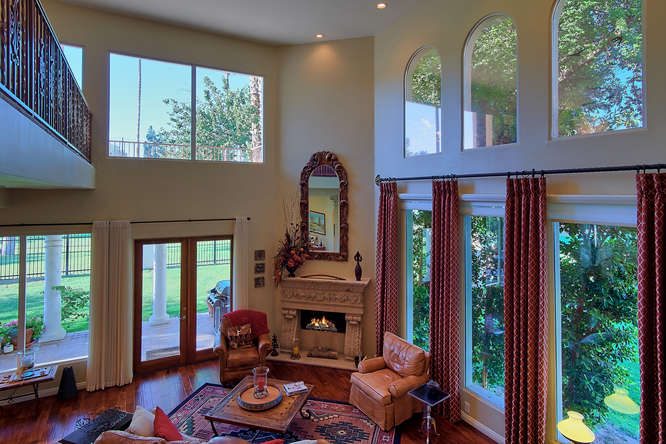
Residents gathered in a shared living room to talk, read or drink coffee. Everyday tasks such as setting the table or folding laundry gave structure to the day and helped people keep their sense of self.
“My mother is at home here. Here she knows everybody.”
Our approach
Designed around the person, not the diagnosis
The same principles that shape our luxury homes, applied to residents who need more support.
- A secure, familiar settingA dedicated unit with its own living, dining and outdoor space, so residents can move freely and safely.
- Small numbers, consistent facesA low resident count lets caregivers build real relationships and tailor care to each person.
- Meaningful daily routinesMeals, light household tasks, walks, music and activities that reflect each resident’s history and interests.
- Families as membersRelatives are welcomed into daily life, care decisions and outings, not limited to visiting hours.
- Clinical oversightCare guided by our Chief Medical Officer, an emergency physician with nearly 20 years of practice.
The need
80 million people with dementia by 2040
Dementia is one of the fastest-growing care needs in an aging population, and families increasingly want an alternative to the large institution. A well-run memory care unit inside a residential community offers that alternative.
Want to know how you can get involved?
Talk to Peter and the team about current properties, how the financing works, and where you fit.